

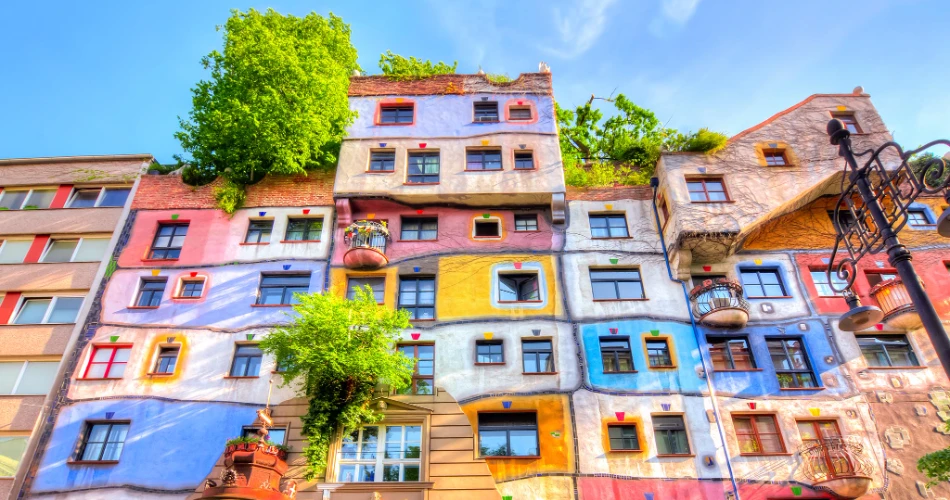
Vienna is celebrated for its imperial palaces, baroque avenues, and world-class museums. But among its grand concert halls and traditional coffeehouses stands a building that feels straight out of a dream: Hundertwasserhaus Vienna. Completed in 1985, this vibrant apartment complex breaks every architectural rule with uneven floors, colorful mosaics, and rooftop trees.
The building was designed by Friedensreich Hundertwasser, an Austrian artist known for his bold philosophy that “straight lines are inhuman.” In collaboration with architect Josef Krawina, he created a residential space that defies conformity, celebrates individuality, and integrates nature into everyday life. Today, Hundertwasserhaus attracts travelers from around the world eager to see a masterpiece of modern art architecture in the heart of Vienna.
Who Was Friedensreich Hundertwasser?
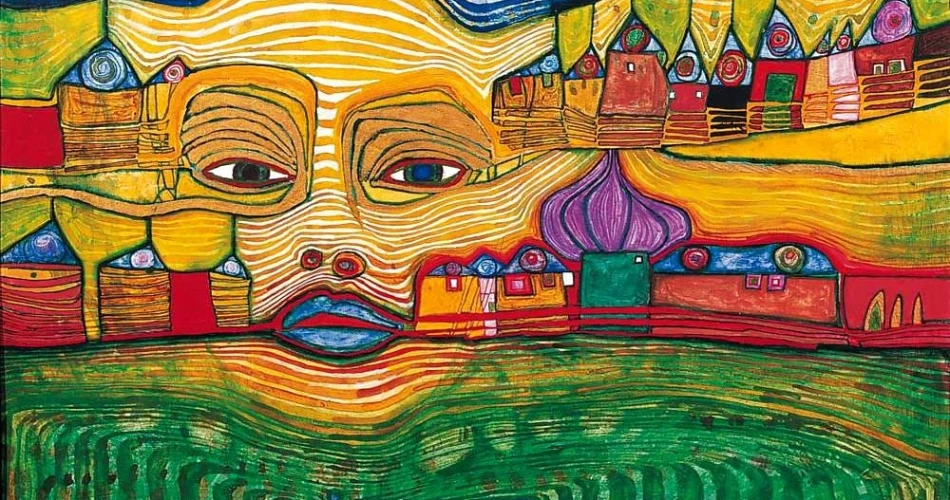
Before marveling at Hundertwasserhaus, it’s worth understanding the man behind it. Friedensreich Hundertwasser (1928–2000) was not only an artist but also an environmental activist and philosopher. He believed architecture should nurture the soul rather than impose uniformity. Straight lines, in his view, represented lifelessness, while irregular, flowing forms reflected the vitality of nature.
Hundertwasser’s artwork—filled with spirals, bright colors, and organic shapes—translated naturally into his architectural projects. His goal was to humanize urban living by giving residents creative freedom and surrounding them with greenery. He introduced the concept of “window rights,” where tenants could customize the exterior space around their windows to express individuality.
Hundertwasser was also an early advocate of ecological building design. By incorporating trees and shrubs into Hundertwasserhaus, he foreshadowed today’s trend toward sustainable, green architecture long before it became mainstream.
The Vision and Construction of Hundertwasserhaus Vienna
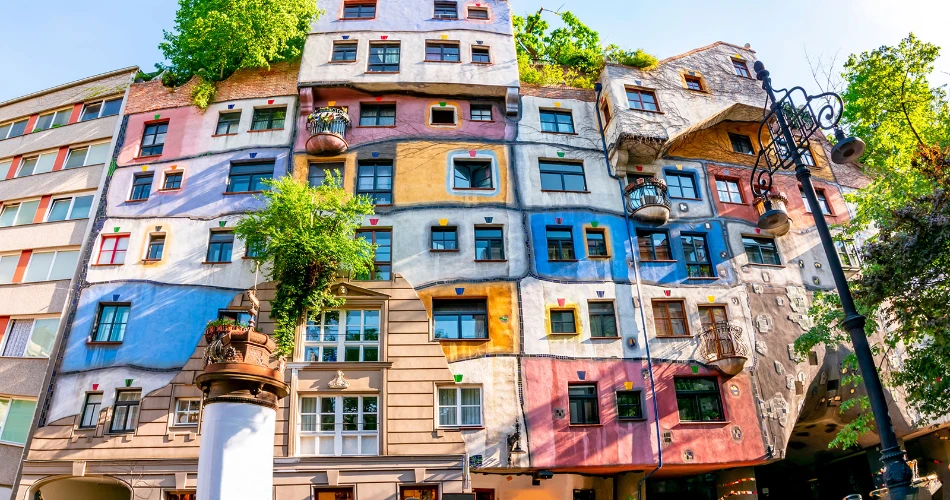
Hundertwasserhaus, located in Vienna’s Landstraße district, was constructed between 1983 and 1985. Hundertwasser sketched the design, while professional architects—including Josef Krawina and Peter Pelikan—handled the technical execution. The project was commissioned by the City of Vienna as a social housing initiative but quickly grew into a landmark work of art.
The building’s design breaks every convention. Its façade bursts with bold colors and irregular tiles, creating a patchwork effect. The roof and balconies are alive with more than 200 trees and shrubs, symbolizing harmony between humans and nature. Instead of sterile uniformity, Hundertwasser wanted every apartment to feel unique, reflecting the personality of its resident.
At the time of its construction, the building sparked intense debate. Traditionalists criticized its eccentric design, while others celebrated it as a triumph of creativity over monotony. Today, it stands as one of Vienna’s most photographed attractions, proving that daring design can coexist beautifully with the city’s classical elegance.
Architectural Features That Make It Stand Out
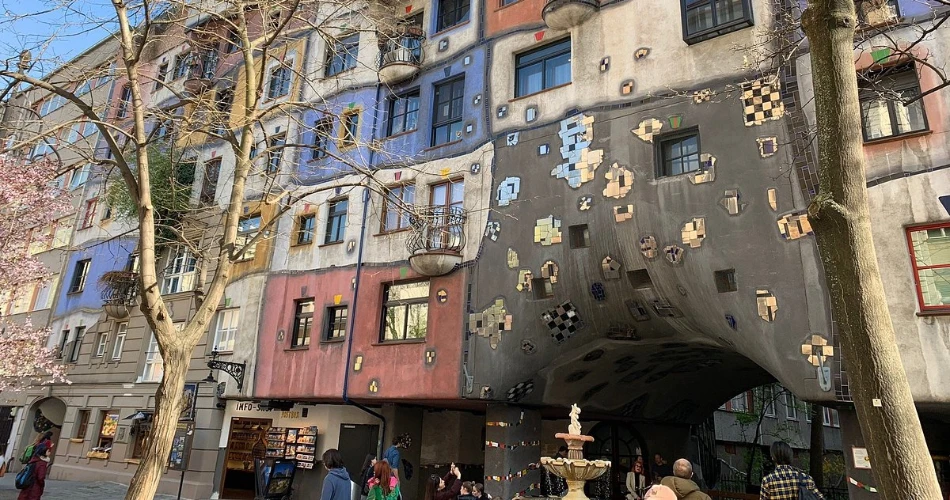
Hundertwasserhaus is often described as a “living painting.” Here are the defining features that make it so remarkable:
Irregular Windows: No two windows are alike. This rejects the monotony of standardized urban housing and celebrates individuality.
Color Explosion: Vivid reds, blues, yellows, and greens dominate the façade, accented with mosaic tiles and ceramic columns.
Organic Floors: Interior floors gently slope instead of remaining flat, reflecting Hundertwasser’s belief that straight lines are unnatural.
Green Roof and Balconies: Trees grow out of windows, terraces, and the roof, making the building feel alive and self-sustaining.
Personalized Touches: Residents are encouraged to decorate their surroundings, turning the building into a collaborative piece of art.
Together, these elements embody Hundertwasser’s philosophy: architecture should embrace diversity, individuality, and environmental responsibility rather than enforcing sterile uniformity.
Visiting Hundertwasserhaus – What to Expect
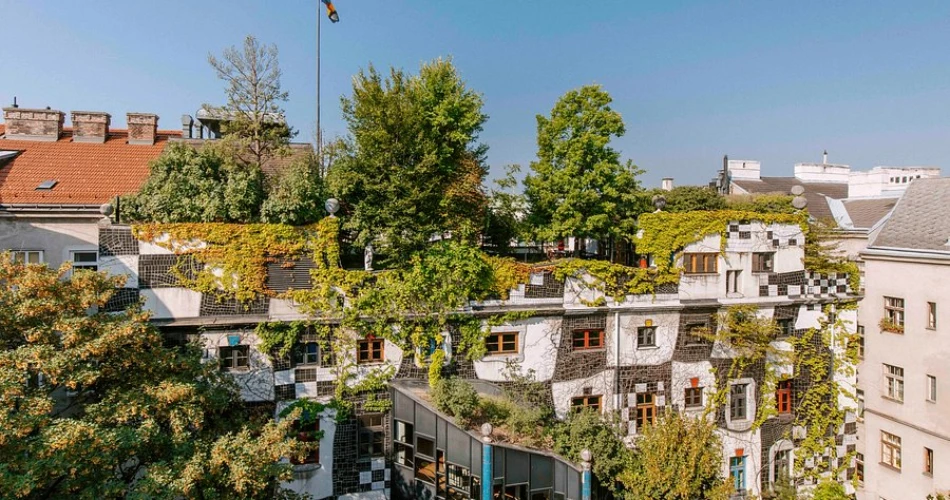
Hundertwasserhaus is a residential building, so you cannot tour the interior apartments. However, the exterior alone is worth the trip. Visitors gather outside to photograph its vivid colors, quirky windows, and lush greenery spilling over balconies.
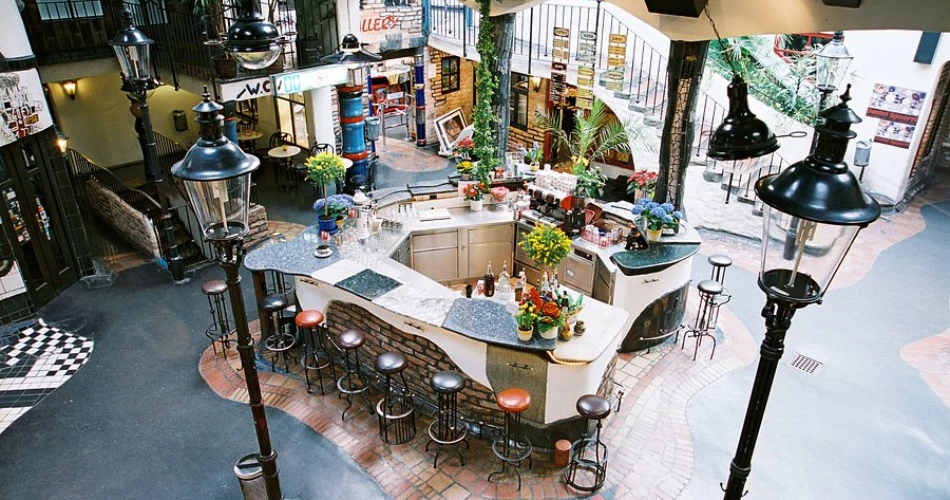
Directly opposite is Hundertwasser Village, a small public complex designed in the same artistic style. Here, you’ll find souvenir shops, an indoor courtyard, and a café decorated with Hundertwasser’s signature curves and colors. A short walk away, Kunst Haus Wien (Hundertwasser Museum) showcases the artist’s paintings, architectural models, and environmental projects, providing deeper insight into his creative world.
Many walking tours of Vienna include Hundertwasserhaus as a highlight. Guides explain the building’s history, design features, and philosophical meaning, adding context you might miss when visiting on your own.
How to Get to Hundertwasserhaus
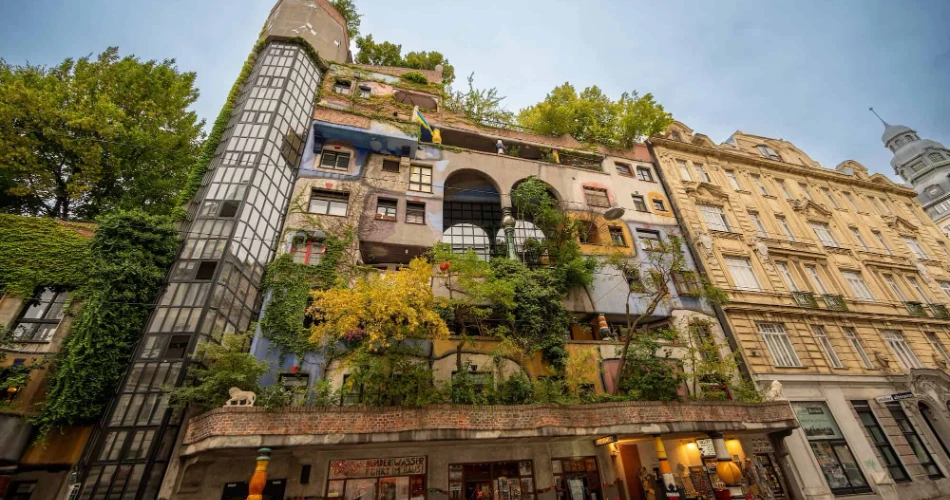
Hundertwasserhaus is located at Kegelgasse 34-38, 1030 Vienna, about a 15-minute trip from the city center. Vienna’s efficient public transport makes it easy to reach:
By Tram: Take tram line 1 to Hetzgasse or Radetzkyplatz, both a short walk away.
By Metro: Use the U3 or U4 lines to Landstraße station, then walk about 10 minutes.
By Bus: Routes 4A and 74A stop nearby.
Since the building is outdoors, it’s open to view at any time. For photography, mornings or late afternoons offer the best lighting conditions with fewer crowds. Visiting on weekdays also ensures a quieter experience, as weekends can draw large groups of tourists.
Why Hundertwasserhaus Matters – Beyond Its Looks
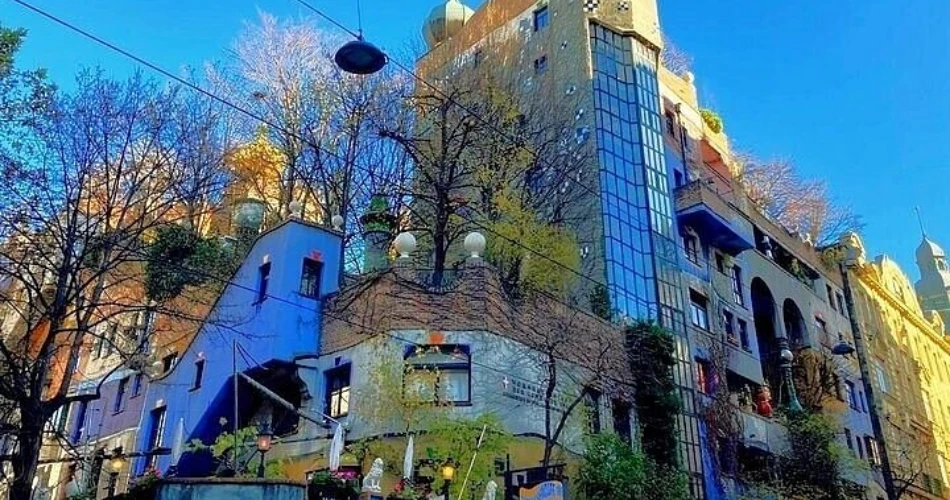
Hundertwasserhaus isn’t just eye-catching—it’s a powerful statement about how cities should be designed. By combining art, individuality, and environmental awareness, Hundertwasser challenged the sterile, repetitive architecture that dominated post-war Europe. His work inspired future architects to consider ecological solutions and prioritize human creativity in building design.
The building also represents Vienna’s willingness to embrace innovation. In a city renowned for imperial tradition and classical beauty, Hundertwasserhaus proved that modern art can coexist with history, enriching rather than disrupting the urban landscape.
For travelers, Hundertwasserhaus offers more than a photo opportunity. It’s an invitation to think differently about where and how we live—and to imagine cities that feel alive, colorful, and deeply connected to nature
Nearby Attractions Worth Visiting
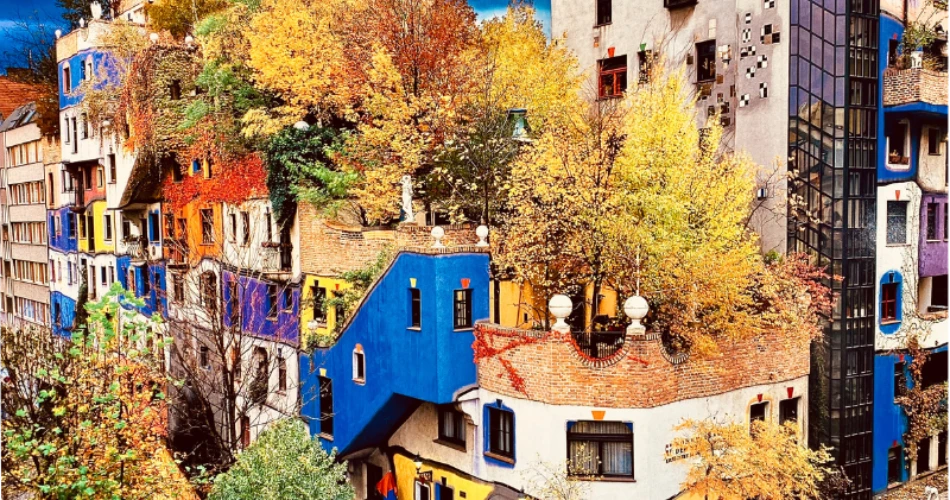
While exploring Hundertwasserhaus, make time to see other nearby highlights:
Kunst Haus Wien: Dive into Hundertwasser’s paintings, graphic art, and ecological projects.
Belvedere Palace: Home to Gustav Klimt’s iconic The Kiss and an impressive baroque garden.
Stadtpark: Relax in this central park, famous for the golden Johann Strauss monument.
Prater Park and Giant Ferris Wheel: Experience Vienna’s classic amusement park and panoramic city views.
Ringstrasse Boulevard: Stroll Vienna’s historic avenue lined with grand buildings, cafés, and cultural landmarks.
These attractions allow you to balance Vienna’s modern creativity with its timeless imperial charm.
Tips for Making the Most of Your Visit
Visit Kunst Haus Wien first: Understanding Hundertwasser’s philosophy deepens your appreciation of the building.
Respect the residents: Hundertwasserhaus is a private home—admire it from the outside without disturbing tenants.
Look for small details: Notice how trees grow freely, how no windows are the same, and how colors blend unpredictably.
Photograph from different angles: Walk around the block to see how the building changes depending on your perspective.
Return in different seasons: In spring and summer, greenery flourishes, while in winter, the colors pop against Vienna’s gray sky.
Conclusion
Hundertwasserhaus Vienna is far more than a colorful apartment block. It’s a bold manifesto against uniformity, a celebration of individuality, and a vision for harmony between urban life and nature. Designed by Friedensreich Hundertwasser, this masterpiece transformed public housing into living art and became one of Vienna’s most beloved landmarks.
Whether you’re an architecture enthusiast, an art lover, or simply curious about Vienna’s unique sights, Hundertwasserhaus promises an unforgettable experience. Take your time to explore the building, visit nearby Hundertwasser Village, and learn more about the artist at Kunst Haus Wien. Together, these sites reveal a world where architecture reflects humanity—not the other way around.